Shed Cost Guide
Shed Cost Guide: Real Prices by Size, DIY vs Built (2026)
Shed cost comes down to three decisions: how big, what material, and who does the work. Most homeowners land between $1,500 and $8,500 for a finished building, with national averages clustering around $3,500 to $4,500. Per square foot, expect $20 to $150 depending on how custom you go.
- Vetted local builders
- Free quotes
- 24–48h response
Updated July 2026. The prices below come from published industry guides and what builders in our network quote, and unlike most pages ranking for this question, we don’t sell DIY plans or our own product line. We match homeowners with vetted local builders, which means the honest comparison is the whole point.
How much does a shed cost?
A basic delivered storage shed starts around $1,400 for an 8×8 and climbs with size: roughly $3,000 to $4,500 for the popular 10×12, and $8,500 to $13,000 for a 12×24. Custom-built structures run higher. DIY materials cost 40 to 50% less than a finished building, paid for in your own weekends.
For context, Home Depot’s services page puts the average installed shed at about $4,500, and LawnStarter’s guide pegs the average build at $3,634. Both are consistent with what our builders see: a normal shed project is a $2,000 to $9,000 decision, not a $500 one.
Shed prices by size
The table that answers most of this page’s question. “Delivered prefab” is a finished building, delivered and leveled on your site. “Custom-built” is built to your spec, on-site or to order, with standard installation.
| Size | Sq ft | Delivered prefab (typical) | Custom-built, installed |
|---|---|---|---|
| 8×8 | 64 | $1,400 – $2,500 | $3,200 – $5,000 |
| 8×10 | 80 | $2,400 – $3,600 | $3,500 – $5,500 |
| 10×10 | 100 | $2,800 – $4,500 | $5,000 – $8,000 |
| 10×12 | 120 | $3,000 – $4,500 | $6,000 – $9,500 |
| 10×16 | 160 | $4,200 – $6,300 | $7,000 – $11,000 |
| 12×16 | 192 | $5,500 – $8,500 | $9,000 – $14,000 |
| 12×20 | 240 | $7,000 – $10,500 | $12,000 – $18,000 |
| 12×24 | 288 | $8,500 – $13,000 | $15,000 – $22,000 |
| 16×20 | 320 | $9,500 – $14,500 | $17,000 – $25,000 |
| 20×20 | 400 | $13,000 – $19,000 | $18,000 – $28,000 |
The low end of each range is a basic vinyl or wood utility build; the high end reflects upgraded materials, taller walls, and extras. These figures are consistent with shedplans.org’s 2026 size table and Alan’s Factory Outlet’s $20–$150 per square foot benchmark, cross-checked against what builders in our network quote. The 8×10 and 10×10 rows are classic garden shed territory; from 12×16 up you’re into workshop and garage-adjacent builds. Browse shed styles and sizes to see what moves you up or down a row.
Two rows worth flagging for paperwork: a 12×16 at 192 square feet is the biggest common size that usually avoids a permit. Everything from 12×20 up crosses the common thresholds, and the 16×20 and 20×20 rows need a permit essentially everywhere.
Is it cheaper to build a shed or buy one?
The question Reddit currently ranks #1 for, and the thread’s own conclusion is the honest answer: often, not by much. The top answer priced an 8×14 prefab at about $3,400 and found DIY materials came to almost exactly the same number.
The fuller picture:
| Path | What you pay | What you trade |
|---|---|---|
| DIY from scratch | Materials only, roughly 40–50% off the total | 20–50 hours for a 10×12, your tools, your mistakes |
| Prefab kit | Materials + factory margin | Assembly (1–3 days), foundation still on you |
| Delivered building | Full price, but complete | Nothing — delivered and leveled |
| Custom built | The most, itemized | Nothing, and it’s built for your site |
DIY genuinely wins when your labor is free, your tools exist, and lumber prices behave. It loses the moment you price your weekends, botch a materials run, or hit the part where the roof needs two people. Kits split the difference but leave you the foundation and the assembly.
DIY also carries costs the materials list never shows. Tool purchases and rentals if your garage isn’t already equipped. A waste factor on lumber and siding, because first cuts aren’t always right cuts. And the redo tax: a racked wall or an out-of-square floor gets fixed with more materials and more hours. Experienced builders price none of this because they don’t pay it.
The wrinkle most guides skip because they sell plans or kits: a delivered building from a local builder is often barely more than DIY materials, arrives in weeks, and comes with someone who answers the phone if something’s wrong. That’s what the Reddit math showed.
What moves the price
Four variables do most of the work on your final number.
Materials and siding
Framing lumber runs $12 to $25 per square foot of floor area for a stick build. Siding sets the look and a chunk of the budget: vinyl at roughly $3 to $7 per square foot is the budget-friendly tier, wood and T1-11 at $5 to $15 needs periodic paint or stain, and metal at $6 to $16 is the durability play. Material choice alone can swing a mid-size shed by a couple thousand dollars.
Foundation
A gravel pad costs about $1 to $2 per square foot and suits most delivered sheds. A poured concrete slab runs $6 to $12 per square foot, which means $600 to $1,200 or more for a 10×10, and it’s the right call for garages and heavy use. All-in foundation budgets across common sizes land between $1,000 and $5,000.
Style and roof type
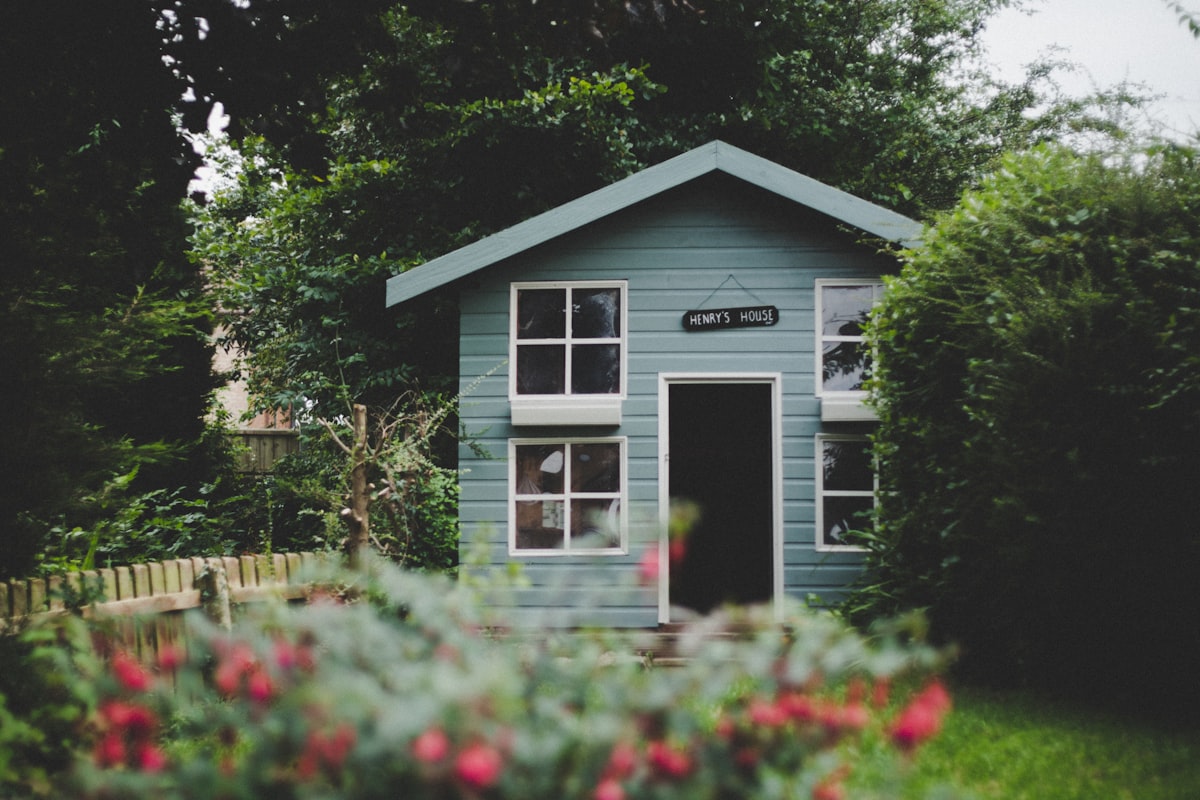
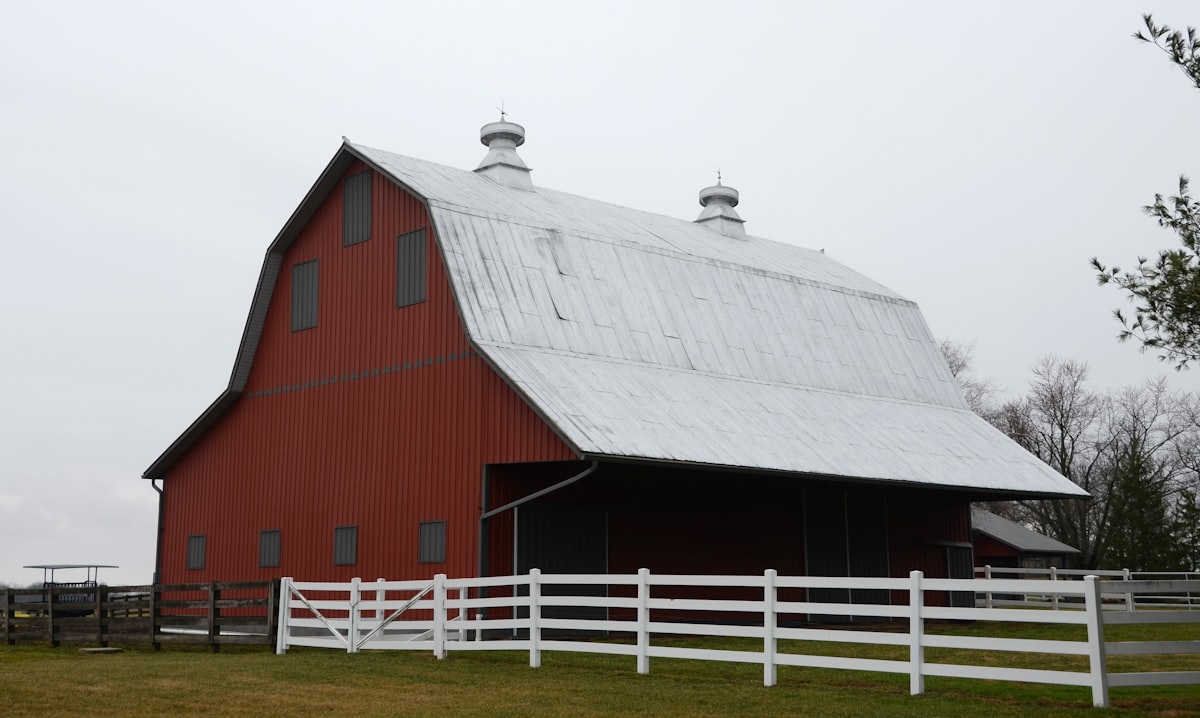
A gambrel-roof barn costs more than a basic gable of the same footprint, and it buys you a loft’s worth of overhead storage in return. Taller walls, dormers, porches, and lofted designs all add material and framing hours. Style upgrades are usually the best-value line on the quote, because they change what the building can do rather than just how it looks. Still, they’re why two 10×12 quotes can sit $1,500 apart.
Labor
Contractors charge $50 to $100 an hour for shed work, and professional assembly of a prefab kit adds $10 to $20 per square foot. On a custom build, labor is commonly a third to half the invoice, which is exactly why the DIY discount is real and why it costs you 20 to 50 hours.
Worth knowing what an “installed” price from a builder normally includes: delivery to your site, leveling on blocks or your prepared pad, and the builder’s workmanship warranty. If a quote is vague about any of those three, ask.
Site prep and delivery access
Grading, clearing, and leveling range from a few hundred dollars on an easy site to several thousand on a wooded or sloped one; Alan’s guide pegs full land clearing at roughly $1,300 to $3,900. Delivery access matters too: a tight gate or backyard with no truck path can force a smaller building, an on-site build, or a crane line-item.
Distance is its own factor. Free delivery from most dealers covers a set radius, commonly 25 to 50 miles from their lot, and mileage charges apply past it. A builder matched to your actual area usually beats a distant dealer’s sticker price once freight is counted.
A note on pole sheds and pole barns
“Pole shed” searchers are usually pricing a different animal: post-frame construction, where posts in the ground replace a full foundation. At barn and equipment-building scale, post-frame tends to price attractively per square foot because the foundation is minimal. At backyard sizes, the advantage mostly disappears, which is why standard sheds dominate under 400 square feet. If you’re pricing a true pole barn for equipment or livestock, get quotes from post-frame specialists; the tables above will undershoot it.
The costs people forget
The shed price is not the project price. Budget for these before you sign anything:
- Permit fees: $50 to $300 for most residential sheds, typically toward the low end. Whether you need one depends on size and your state; the thresholds are mapped in our shed permit guide.
- Electrical: running power to the shed typically costs $1,000 to $3,000 for trenching and hookup by a licensed electrician; short simple runs can come in under that. Any wired shed also needs an electrical permit.
- Finishing the inside: shed conversion costs are their own budget. Turning a storage building into a finished office or studio adds insulation, wiring, and interior work on top of everything here — our backyard office guide prices that project separately.
- Inspections: where required, $200 to $500.
- Add-ons: typically $30–$450 per window, $100–$1,500 per extra door, plus shelving, ramps, and lofts. Small individually. Never small together.
- Property tax: a permanent, permitted structure can nudge your assessment. See the FAQ below.
A useful planning rule from our builders: whatever the building costs, hold back another 15 to 25% for site work and extras.
How to pay for it: cash, financing, or rent-to-own
Cash is the lowest total cost, full stop. But it’s not the only sane path, and this is the section every cost guide skips.
Many builders in our network offer rent-to-own: no credit check, a small deposit, and monthly payments that end in ownership. On 36-month plans, typical payments look like this:
| Size | Cash price | 36-month rent-to-own |
|---|---|---|
| 8×10 | $2,400 – $3,600 | $110 – $170/mo |
| 10×16 | $4,200 – $6,300 | $195 – $290/mo |
| 12×20 | $7,000 – $10,500 | $325 – $490/mo |
The trade-off is real: a 36-month plan totals roughly 1.5 to 1.7 times the cash price. The full math, early-payoff rules, and what to check before signing are in our rent-to-own shed guide. Traditional financing sits in between, with a credit check and interest instead of lease fees.
Why shed prices vary by region
The same 10×12 can quote hundreds of dollars apart in different states, and it’s not dealer mood. Labor rates differ regionally. Delivery distance from the builder’s shop adds real freight. And climate changes the build spec: wind-zone anchoring in hurricane country, snow-load framing in northern states, both of which add material and labor before any style choices happen.
We saw this pattern in published dealer pricing while researching our rent-to-own guide: the same 10×12 barn listed at $3,009 by one regional builder and $4,467 by another, both legitimate, in different markets. Neither number is wrong. They’re pricing different labor pools, freight, and build specs.
That’s the practical case for pricing locally instead of trusting a national average, ours included. A local builder’s quote prices your site, your access, and your county’s rules, not a spreadsheet’s.
Shed cost FAQ
Can you build a shed for $1,000?
A small one, yes, if you do all the labor. A 6×4 or 8×8 DIY build can land under $1,000 in materials if you keep the design simple and prices cooperate. What you can’t get for $1,000 is a delivered building or anyone else’s labor. At that budget, you’re the crew.
How much would a 20×20 shed cost to build?
A 20×20 is a 400-square-foot building, which is garage territory. Expect roughly $15,000 to $25,000 for a delivered or built structure depending on siding, doors, and region, and remember a building this size needs a permit almost everywhere.
How much does it cost to build a 12×12 shed yourself?
Budget roughly $2,000 to $3,000 in materials for a basic 12×12 DIY build, consistent with published DIY ranges for nearby sizes. Add foundation materials and 20 to 50 hours of your time. A comparable delivered shed runs $3,500 to $5,500.
How much does a shed cost per square foot?
$20 to $150 per square foot is the honest industry range, per Alan’s Factory Outlet’s current guide, with LawnStarter stretching the top to $175. The spread is wide because it covers everything from a bare vinyl shell to a custom build with upgraded siding and site work. Delivered basic sheds mostly land at $30 to $45 per square foot; custom builds commonly run $50 to $75.
Will my property taxes go up if I build a shed?
Sometimes. Permanent structures on foundations can raise your assessed value, while small movable sheds on blocks often don’t register at all. Every county assessor treats this differently, so ask yours before you build. A permitted shed is more likely to be assessed, and an unpermitted one that gets discovered creates bigger problems than taxes.
What is the cheapest time of year to buy a shed?
Late fall and winter, generally. Demand peaks in spring and summer, so many dealers discount display models and slow-season orders once the rush ends. Used and repossessed rent-to-own inventory is the other genuine discount, and that appears year-round.
What’s the biggest size shed without a permit?
In most states, 200 square feet is the line for a basic shed with no utilities, though some states and cities use 120. A 12×16 usually clears it; a 12×20 usually doesn’t. State-by-state thresholds are in our shed permit guide.
Calculators estimate. Builders quote. Tell us your size, style, and ZIP code, and a vetted local builder will price your actual project, delivery and site quirks included. Get your free quote and have a real number within 24 to 48 hours. No pressure, no obligation.